Knee pain is one of the most common problems I see in active adults and gym-goers. It often shows up during squats, lunges, running, jumping, step-ups, or change-of-direction work. The frustrating part is that many people assume the knee itself is the whole problem.
Often, it is not.
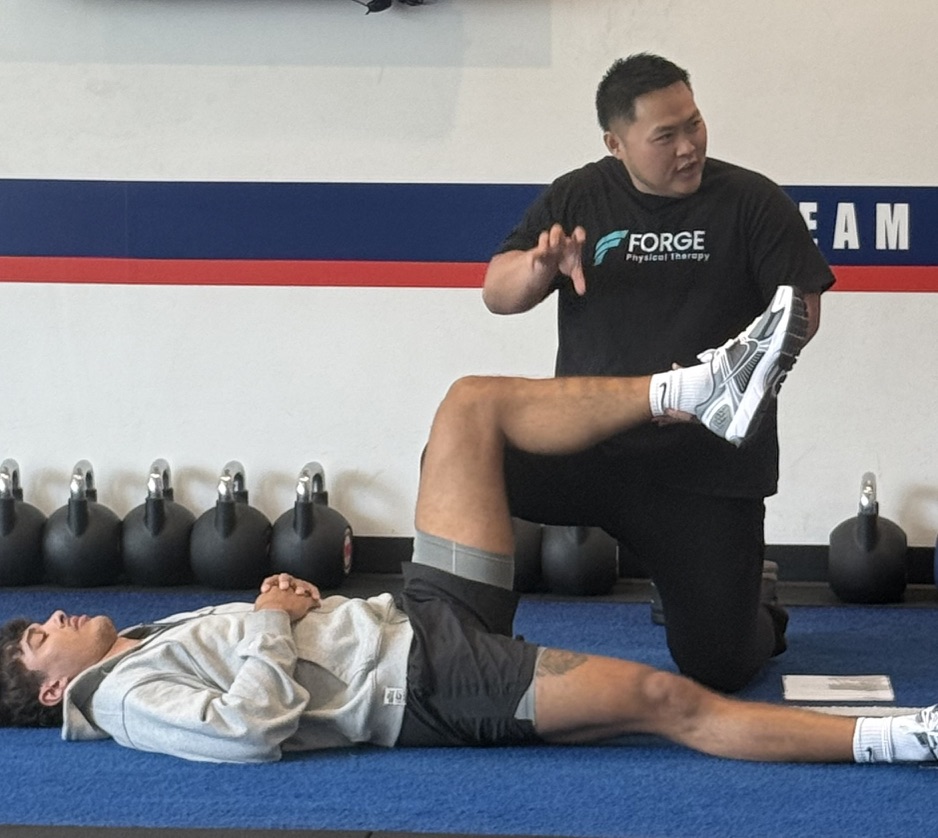
At a recent knee pain workshop I led with F45 Corte Madera, we focused on a simple idea: the knee is often a consequential joint. In other words, it frequently suffers the consequences of what is happening above it at the hip and below it at the ankle.
If your hips are stiff, your ankles are restricted, or your mechanics break down under load, your knees usually pay for it.
At the workshop, we broke knee health down into 3 major categories:
How you move matters.
If your squat is collapsing inward, your feet lose pressure, your arches cave, or your trunk rounds excessively, your body may be distributing force poorly. Over time, that can overload the knee.
For many people, the answer is not to stop squatting or avoid training. It is to improve the way they squat, lunge, land, and absorb load.
Healthy knees need enough motion not just at the knee itself, but also at the hip and ankle.
In the workshop, we looked at:
If the hip is stiff or the ankle cannot move well, the knee often compensates. That is why improving hip and ankle mobility can sometimes reduce knee pain surprisingly fast.
A lot of knee stress happens one leg at a time.
Think about lunges, step-ups, hopping, agility work, and single-leg strength training. If your hip, knee, and foot cannot stay aligned under load, the knee often takes the hit.
This is why balance, single-leg control, and strength matter so much for active adults and athletes.
During the session, members performed a few simple movement screens to help identify where their biggest limitations might be:
These quick tests helped members see that knee pain is often connected to movement quality, mobility restrictions, and single-leg control deficits rather than just “bad knees.”
We focused on practical drills that members could use right away, including:
The goal was not to chase pain with random stretches. The goal was to improve the underlying movement system that supports the knee.
If your knees hurt during training, the solution is not always to stop exercising or “just rest.”
Often, the better approach is to:
That is how you build stronger, more resilient knees and keep training with fewer setbacks.
If your knees are bothering you during squats, lunges, running, jumping, or gym workouts, a more individualized assessment may help you figure out why it is happening and what to do next.
At Forge Physical Therapy in Corte Madera, I work 1-on-1 with active adults and athletes to identify the root cause of pain, improve movement, and help people get back to training with confidence.
If you want help figuring out what is driving your knee pain, reach out through the website or contact Forge PT directly.
.svg)
.svg)
.svg)