FitnessRun Better, Hurt Less: Key Takeaways from Our Orangetheory Running Workshop
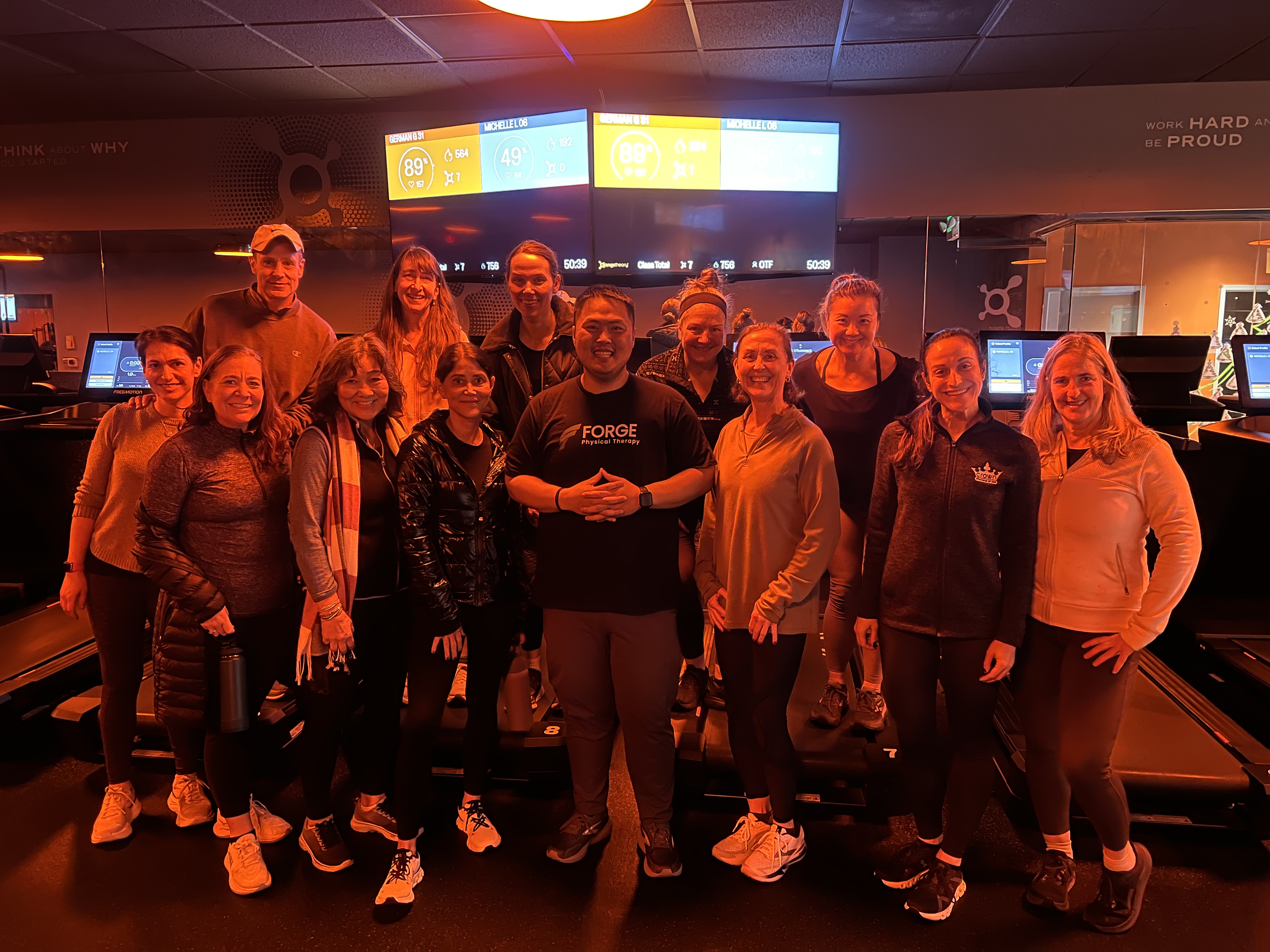
Last week, I had the opportunity to host a running mechanics workshop for members at a local Orangetheory Fitness studio. It was an awesome group of motivated runners who all shared a common goal: staying healthy while continuing to train hard.
Running does not have to lead to nagging aches, recurring injuries, or constant setbacks. Most issues I see in runners come down to a few key movement limitations and habits that are very fixable with the right approach.
Here are some of the biggest takeaways from the workshop and what runners of all levels can apply right away.
1. Ankle Mobility Matters More Than You Think
One of the first joints we looked at is the ankle. Limited ankle motion can force the body to compensate up the chain, often showing up as knee pain, Achilles irritation, plantar fasciitis, or even hip and low back discomfort.
When the ankle cannot move well, runners often overstride or lose efficiency during push off. Improving ankle mobility helps allow smoother loading and better force transfer with each step.
Consistent stretching of your soleus muscles can help improve your mobility for running.
2. Hip Extension Is Key for Efficient Running
Most people spend most of their day sitting, which can limit hip extension over time. During the workshop, we assessed hip extension because it plays a major role in stride length, power generation, and overall running efficiency.
When hip extension is limited, runners often compensate by overusing their low back or hamstrings. This can contribute to tightness, fatigue, or pain during longer runs.
Targeted hip flexor mobility combined with strength work helps runners access better hip extension without forcing it.
3. Squat and Single Leg Control Reveal a Lot
The squat test and single leg balance assessments give a quick snapshot of how well the hips, knees, and ankles work together.
Loss of control, knee collapse, or trunk shifting during these movements often mirrors what happens during running. Improving single leg strength and stability can significantly reduce stress on the knees and hips over time.
Exercises like split squats and controlled single leg work help build the foundation runners need to stay resilient.
4. Small Changes Add Up
One of the biggest messages from the workshop was that runners do not need to overhaul everything at once. Small, consistent improvements in mobility and strength can go a long way when layered into an existing training routine.
The goal is not perfection. It is progress and sustainability.
Final Thoughts
It was great to see so many runners interested in learning more about their bodies and how to train smarter. Education combined with practical movement strategies is one of the most powerful tools for injury prevention.
If you are a runner dealing with recurring pain or want to stay ahead of injuries, a thorough one on one evaluation can help identify what your body specifically needs.
I am always happy to support the local fitness community and help runners continue doing what they love.
Call to Action
If you attended the workshop or are curious about your own running mechanics, you can learn more about working with me at www.ptforge.com or reach out directly with any questions.


.svg)
.svg)
.svg)